
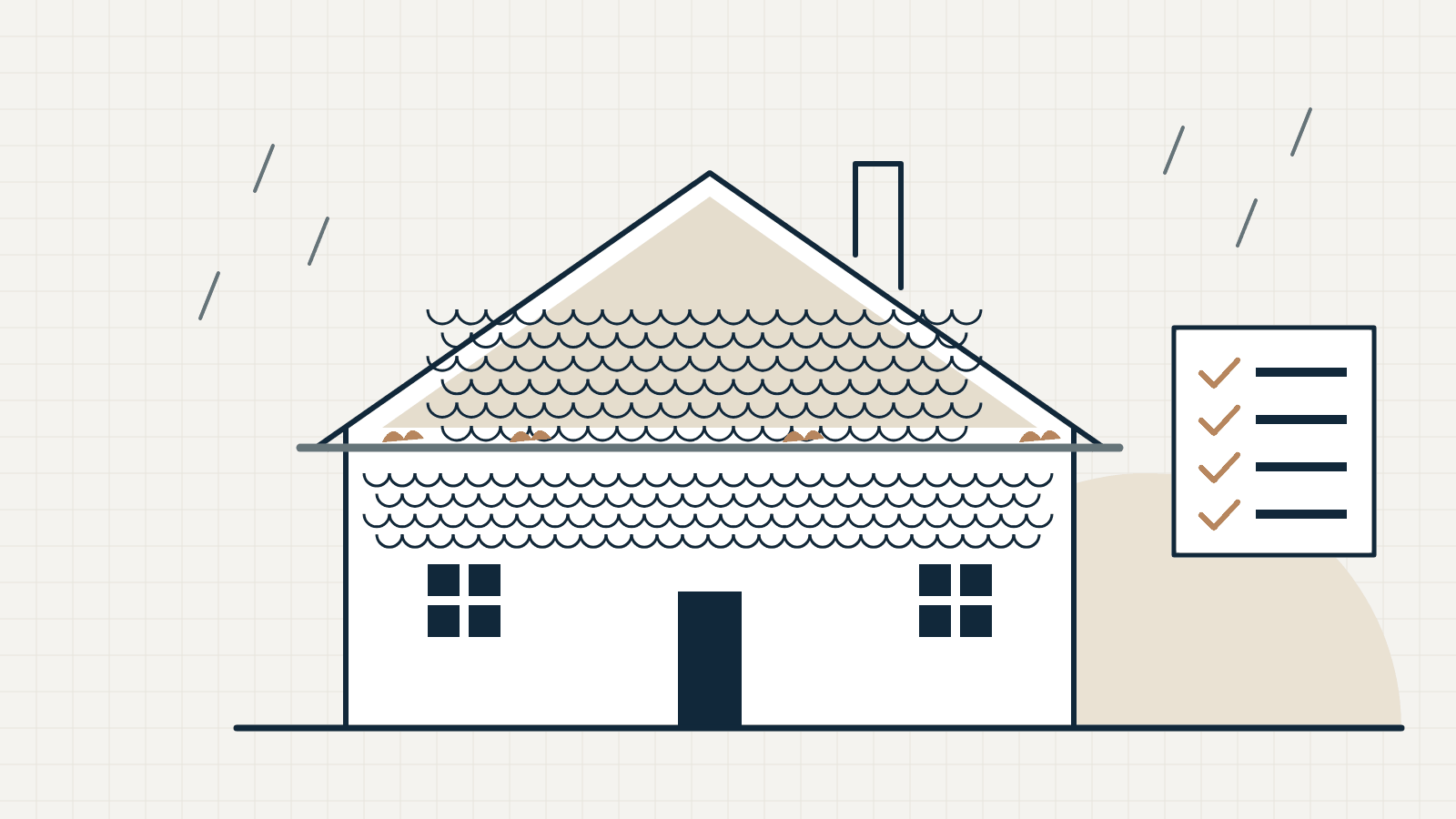
Short answer: check your roof from the ground after leaf fall and after every big storm, clear gutters and valleys, and get slipped tiles or loose flashings fixed before frost gets into them. Don’t climb onto the roof yourself.
Why roofs round here need particular care
Many older homes across the Weald have handmade clay tiles on the roof and tile-hanging on the upper walls. Some of the oldest, in Horsham and the surrounding villages, still have roofs of Horsham stone slabs. Tiles hang on battens by nibs and nails, and as nails rust and battens age, tiles start to slip. Water then gets behind them, and a winter of frost and thaw makes a small gap much bigger.
Storms matter too. Insurers paid out £244 million for storm damage to homes in 2025, 32% more than in 2024.
The checklist
- Gutters and downpipes: clear leaves once the trees are bare, and check joints aren’t dripping onto walls.
- Valleys: where two roof slopes meet, leaves and moss build up and send water under the tiles.
- Ridge and hip tiles: look for cracked or missing mortar and tiles that have lifted.
- Flashings: the lead or mortar seal around chimneys, dormers and where a roof meets a wall.
- Slipped or cracked tiles: a pair of binoculars from the garden shows most of them.
- Tile-hanging: gaps, missing tiles and bulges on the upper walls.
- Chimney stacks: loose pots, eroded brickwork and leaning stacks.
- Flat roofs: blisters, splits and water that sits for days after rain.
- The loft: after heavy rain, go up with a torch and look for daylight, damp patches or drips.
- Fascias, soffits and fixings: rotten boards, and aerials or satellite dishes working loose.
Repair or replace?
Most roofs need occasional repairs long before they need replacing. If tiles keep slipping across a whole slope, the nails or battens have usually failed, and stripping and re-laying that slope on new battens with a breathable membrane is better value than repeated patching. On older homes, reuse sound tiles and match the rest, especially in a conservation area, where changing roof materials can need permission (our conservation areas guide).
Stay safe
Falls from roofs and ladders cause serious injuries every year. Check from the ground and from the loft, and leave anything higher to a roofer with proper access and insurance. On many repairs, the scaffold or tower costs more than the materials, so it’s worth getting several jobs done in one visit.
Questions people ask
How often should gutters be cleared?
At least once a year, in late autumn. If your house is under trees, twice: again in spring.
Is one slipped tile urgent?
It’s worth fixing soon. Water gets into the gap, rots the batten and soaks the felt, and frost makes it worse. A single tile is a quick job; the damage behind it isn’t.
Do I need permission to replace my roof tiles?
Like-for-like repairs usually don’t. A listed building needs listed building consent for most changes, and an Article 4 direction in a conservation area can control a change of material.
We repair clay tiles, tile-hanging, flat roofs, chimneys and gutters across the RH area (see roofing and exterior). Book a survey visit or call 07802 758763.
Sources
- Horsham District Council: Horsham Town Centre Conservation Area Appraisal
- Horsham District Council: Conservation areas and planning permission
- Milliman: UK property insurance 2026, citing ABI claims data
Last checked: 27 November 2026. Rules, grants and fees change; check the linked sources before you rely on them.